Illustrative Ocean Solutions mobile Factory Vessel at sea

Ocean-based production & water supply

Mobile factories.
Water at scale.

Factory Vessels manufacture premium marine products. Marine Water Plants deliver freshwater to regions, cities and industry.

From the ocean.
For the future.
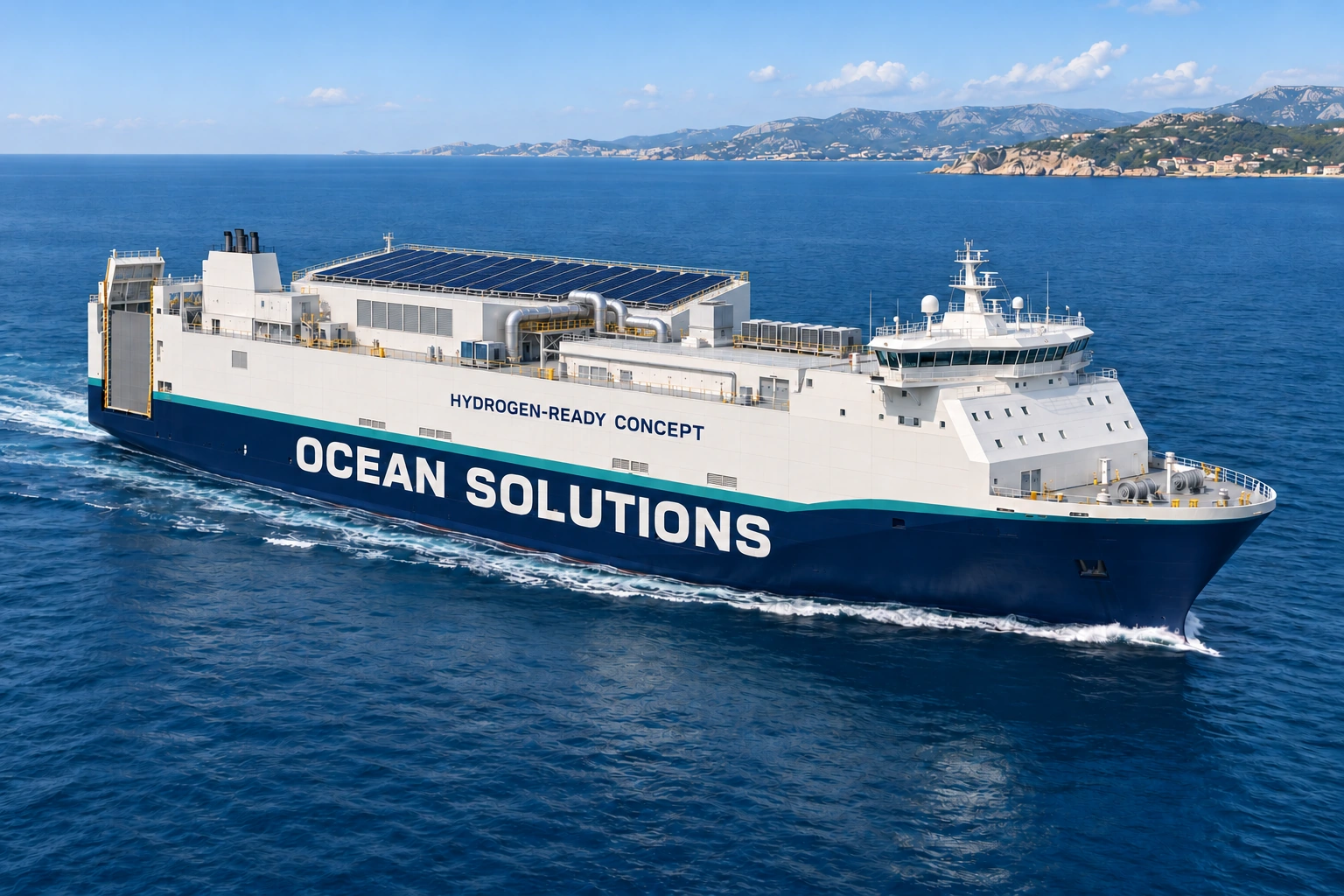
Factory Vessel conceptIllustrative AI-generated visualisation

The opportunity

A new operating model for a water-stressed world.

Ocean Solutions offers two distinct concepts: a mobile Factory Vessel for mineral-rich water and marine-product manufacturing, and a Marine Water Plant (MWP) for long-term, high-volume freshwater supply.

people lacked safely managed drinking water in 2024
experience severe water scarcity for at least one month each year
of global water withdrawals are used by agriculture
of Earth’s water is usable and available freshwater

Sources: WHO/UNICEF JMP (2025; 2024 drinking-water estimates); UN-Water water scarcity (2016 and 2021 estimates); UN-Water / WMO freshwater estimate (2021). Indicators describe different measures and reference years.

Water insights

Where water is under pressure.

Explore water stress by country: demand relative to available renewable water. Select a country to compare the baseline with a possible 2050 future.

Fiji · No dataTanzania · Low–medium (10–20%)Western Sahara · No dataCanada · Low–medium (10–20%)United States · Medium–high (20–40%)Kazakhstan · Medium–high (20–40%)Uzbekistan · High (40–80%)Papua New Guinea · Low (<10%)Indonesia · Medium–high (20–40%)Argentina · Low–medium (10–20%)Chile · Extremely high (>80%)Congo - Kinshasa · Low (<10%)Somalia · Low–medium (10–20%)Kenya · Low (<10%)Sudan · Low–medium (10–20%)Chad · Low (<10%)Haiti · Low–medium (10–20%)Dominican Republic · Low–medium (10–20%)Russia · Low–medium (10–20%)Bahamas · No dataFalkland Islands (Islas Malvinas) · No dataNorway · Low (<10%)Greenland · No dataFrench Southern Territories · No dataTimor-Leste · Low–medium (10–20%)South Africa · Extremely high (>80%)Lesotho · Medium–high (20–40%)Mexico · High (40–80%)Uruguay · Low–medium (10–20%)Brazil · Low–medium (10–20%)Bolivia · Low (<10%)Peru · High (40–80%)Colombia · Low (<10%)Panama · Low (<10%)Costa Rica · Low (<10%)Nicaragua · Low (<10%)Honduras · Low (<10%)El Salvador · Low–medium (10–20%)Guatemala · Low–medium (10–20%)Belize · Low (<10%)Venezuela · Low–medium (10–20%)Guyana · Medium–high (20–40%)Suriname · Low–medium (10–20%)France · Low–medium (10–20%)Ecuador · Low (<10%)Puerto Rico · No dataJamaica · Low (<10%)Cuba · Low–medium (10–20%)Zimbabwe · Medium–high (20–40%)Botswana · Extremely high (>80%)Namibia · Extremely high (>80%)Senegal · Medium–high (20–40%)Mali · Low (<10%)Mauritania · Medium–high (20–40%)Benin · Low (<10%)Niger · High (40–80%)Nigeria · Low (<10%)Cameroon · Low (<10%)Togo · Low (<10%)Ghana · Low (<10%)Côte d’Ivoire · Low (<10%)Guinea · Low (<10%)Guinea-Bissau · Low (<10%)Liberia · Low (<10%)Sierra Leone · Low (<10%)Burkina Faso · Low–medium (10–20%)Central African Republic · Low (<10%)Congo - Brazzaville · Low (<10%)Gabon · Low (<10%)Equatorial Guinea · Low (<10%)Zambia · Low (<10%)Malawi · Low (<10%)Mozambique · Low (<10%)Eswatini · Low (<10%)Angola · Low–medium (10–20%)Burundi · Low (<10%)Israel · Extremely high (>80%)Lebanon · Extremely high (>80%)Madagascar · Low (<10%)Palestine · No dataGambia · Low (<10%)Tunisia · Extremely high (>80%)Algeria · High (40–80%)Jordan · Extremely high (>80%)United Arab Emirates · Extremely high (>80%)Qatar · Extremely high (>80%)Kuwait · Extremely high (>80%)Iraq · Extremely high (>80%)Oman · Extremely high (>80%)Vanuatu · No dataCambodia · Low–medium (10–20%)Thailand · High (40–80%)Laos · Low (<10%)Myanmar (Burma) · Medium–high (20–40%)Vietnam · Medium–high (20–40%)North Korea · Medium–high (20–40%)South Korea · Medium–high (20–40%)Mongolia · High (40–80%)India · Extremely high (>80%)Bangladesh · Medium–high (20–40%)Bhutan · Low (<10%)Nepal · High (40–80%)Pakistan · High (40–80%)Afghanistan · High (40–80%)Tajikistan · Medium–high (20–40%)Kyrgyzstan · High (40–80%)Turkmenistan · High (40–80%)Iran · Extremely high (>80%)Syria · Extremely high (>80%)Armenia · Medium–high (20–40%)Sweden · Low (<10%)Belarus · Low–medium (10–20%)Ukraine · Low–medium (10–20%)Poland · Low–medium (10–20%)Austria · Low (<10%)Hungary · Low (<10%)Moldova · Low–medium (10–20%)Romania · Low–medium (10–20%)Lithuania · Medium–high (20–40%)Latvia · Low (<10%)Estonia · Low–medium (10–20%)Germany · Medium–high (20–40%)Bulgaria · Low–medium (10–20%)Greece · Extremely high (>80%)Türkiye · High (40–80%)Albania · High (40–80%)Croatia · Low (<10%)Switzerland · Low (<10%)Luxembourg · Medium–high (20–40%)Belgium · Extremely high (>80%)Netherlands · Low–medium (10–20%)Portugal · High (40–80%)Spain · High (40–80%)Ireland · Low (<10%)New Caledonia · No dataSolomon Islands · No dataNew Zealand · Low (<10%)Australia · Medium–high (20–40%)Sri Lanka · Medium–high (20–40%)China · Medium–high (20–40%)Taiwan · No dataItaly · High (40–80%)Denmark · Low (<10%)United Kingdom · Low–medium (10–20%)Iceland · Low (<10%)Azerbaijan · Medium–high (20–40%)Georgia · Low (<10%)Philippines · Medium–high (20–40%)Malaysia · Low–medium (10–20%)Brunei · Low (<10%)Slovenia · Low (<10%)Finland · Low (<10%)Slovakia · Low–medium (10–20%)Czechia · Low–medium (10–20%)Eritrea · High (40–80%)Japan · Low–medium (10–20%)Paraguay · Low (<10%)Yemen · Extremely high (>80%)Saudi Arabia · Extremely high (>80%)Northern Cyprus · No dataCyprus · Extremely high (>80%)Morocco · High (40–80%)Egypt · Extremely high (>80%)Libya · Extremely high (>80%)Ethiopia · Low (<10%)Djibouti · High (40–80%)Somaliland · No dataUganda · Low (<10%)Rwanda · Low (<10%)Bosnia & Herzegovina · Low (<10%)North Macedonia · High (40–80%)Serbia · Low–medium (10–20%)Montenegro · Low (<10%)Kosovo · No dataTrinidad & Tobago · No dataSouth Sudan · Low–medium (10–20%)
Low (<10%)Low–medium (10–20%)Medium–high (20–40%)High (40–80%)Extremely high (>80%)No data

Country averages are screening indicators, not drinking-water access measures or a site feasibility study. Future scenarios combine climate and socioeconomic assumptions; their names do not rank outcomes for every country.

Source: WRI Aqueduct 4.0 country rankings (2023 release) · Baseline 1979–2019 · 2050 projections · Total-demand weighting · CC BY 4.0. Scenario methodology. Small countries may be absent at this map scale.

Our solutions

Two solutions.
Different needs.

Factory Vessel concept: a mobile Ro-Ro manufacturing ship at sea
AI concept · Factory Vessel

Factory Vessel

Mobile manufacturing.

Produce mineralised drinking water, oceanic fertilizer and hydrogel, and premium 78MM ingredients. Operate in different locations as production and distribution needs change.

Mobile operationThree product familiesMarine-mineral recoveryMultiple customer markets
Factory Vessel benefits
  • Combine mineralised drinking-water production with oceanic fertilizer, hydrogel and 78MM ingredients on one vessel.
  • Serve different markets through complementary product streams and agreed customer specifications.
  • Move production between suitable locations as supply agreements and distribution needs change.

Product quality, recovery rates and operating performance require project-specific validation. Relocation depends on marine access, logistics and local approvals.
Explore Factory Vessel products
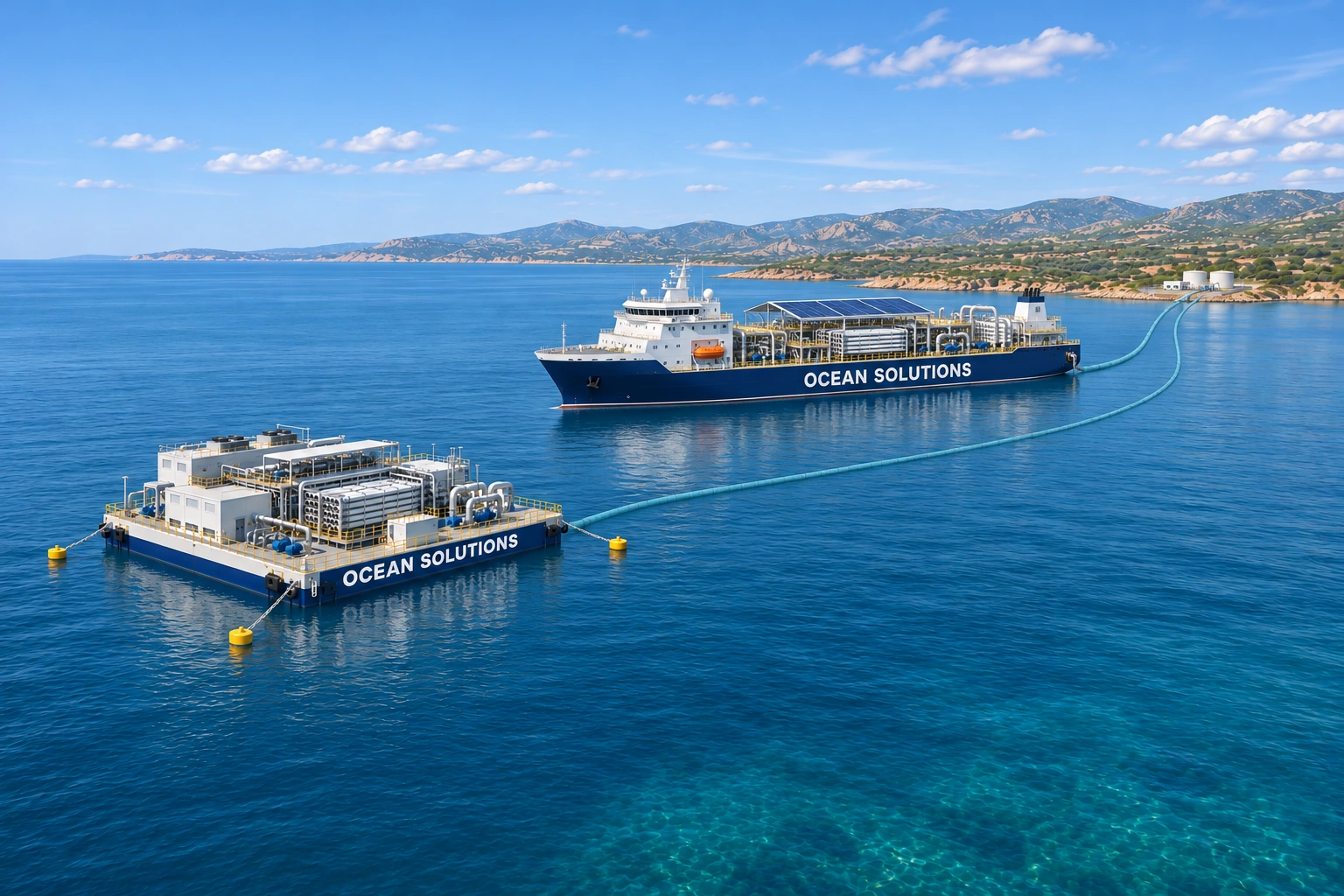
Illustrative MWP alternatives: an Ocean Solutions platform and a large water-production ship offshore, each connected separately to shore
AI concepts · Platform and ship options

Marine Water Plant (MWP)

Long-term water supply.

Supply 40,000–300,000 m³ of freshwater per day through a pipeline to shore and an inland network. A semi-fixed offshore solution: moored for long-term operation, with planned relocation possible as regional needs change.

High-volume freshwaterPipeline to shoreSemi-fixed deploymentPlanned relocation
MWP benefits
  • Additional supply to support communities, industry and agriculture.
  • Offshore production can reduce the footprint of the treatment plant on land; shore connections are still required.
  • Relocation can preserve the use of the platform when demand shifts, subject to towing, reconnection and new approvals.

Output, energy use, intake and brine management require site-specific design and environmental assessment. Relocation is a planned marine operation.

Explore MWP capacity

How it works

Factory Vessel.
Three product families.

01

Deep-ocean intake

Clean, mineral-rich seawater is drawn at depth.

02

Advanced separation

An integrated platform separates fresh water and minerals.

03

Controlled mineralization

Water quality and mineral profiles are precisely managed.

04

Product preparation

Water, fertilizer and 78MM products are prepared for their intended markets.

Factory Vessel · Product portfolio

Every drop
counts.

Three product families. One ocean source.

Explore premium mineralised drinking water, oceanic fertilizer and hydrogel, and 78MM ingredients for your market.Find your market
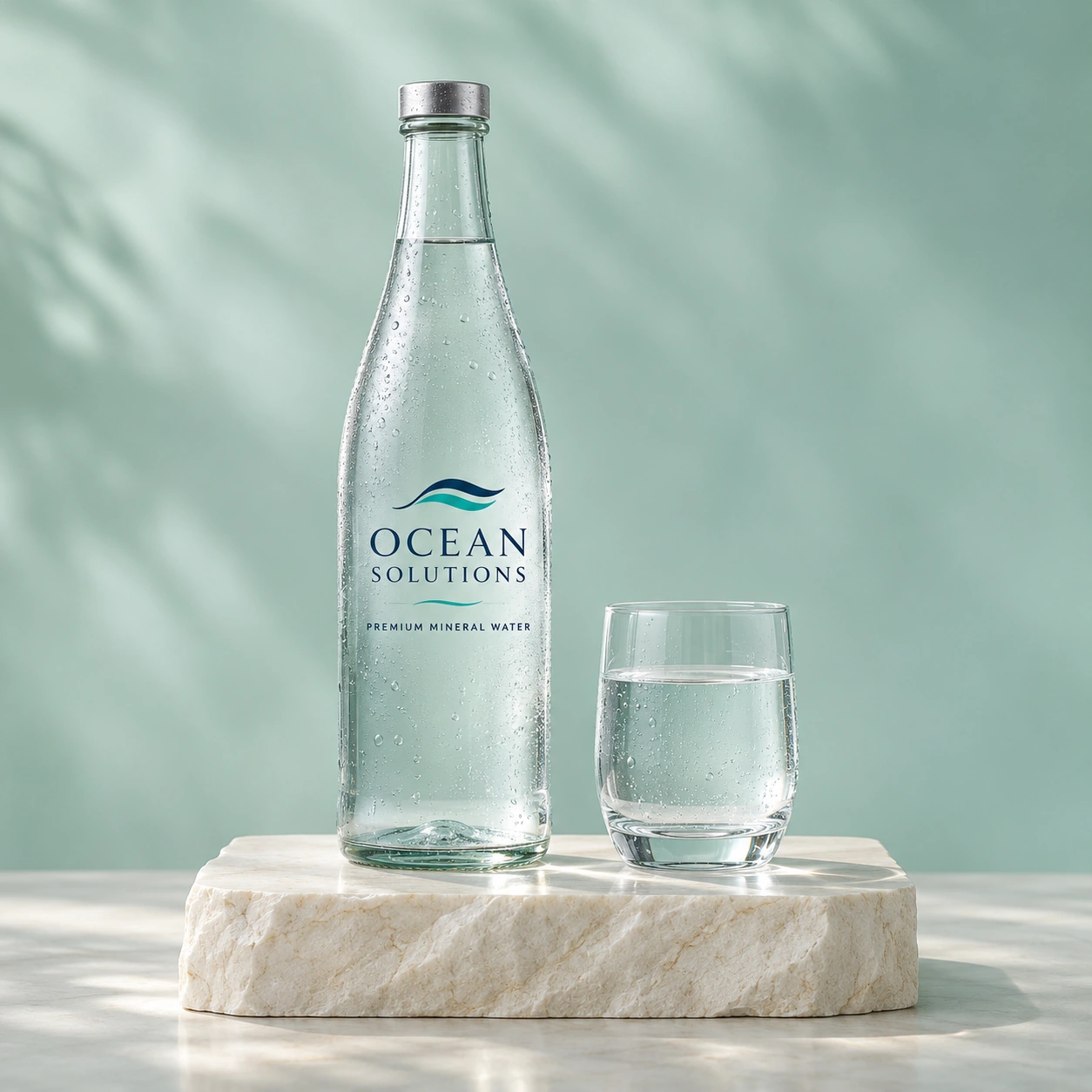
Premium and Standard Mineralised Drinking WaterAI concept
01Premium and Standard Mineralised Drinking Water
Ocean origin. A profile for every market.Explore product

Ocean origin. A considered mineral profile.

Premium and Standard ranges with a controlled marine-mineral profile, developed around taste, quality and your product specification.

Premium Drinking Water

A proposed premium range with a specified marine-mineral profile, designed for distinctive taste and quality.

Standard Drinking Water

The proposed composition includes seven minerals and dissolved constituents: calcium, magnesium, sodium, potassium, bicarbonate, sulphate and chloride. Final concentrations and product specifications are subject to testing.

These product-range names describe controlled-mineral drinking water. They do not claim recognised natural mineral water status. Applicable drinking-water standards, composition testing and market-specific labelling apply.

For Hotels, restaurants, retailers & distributors

Your advantages

  • Develop premium and standard ranges around an agreed mineral composition and quality specification.
  • Build differentiated hospitality, retail, beverage and private-label products with an ocean-origin story.
Discuss your requirements
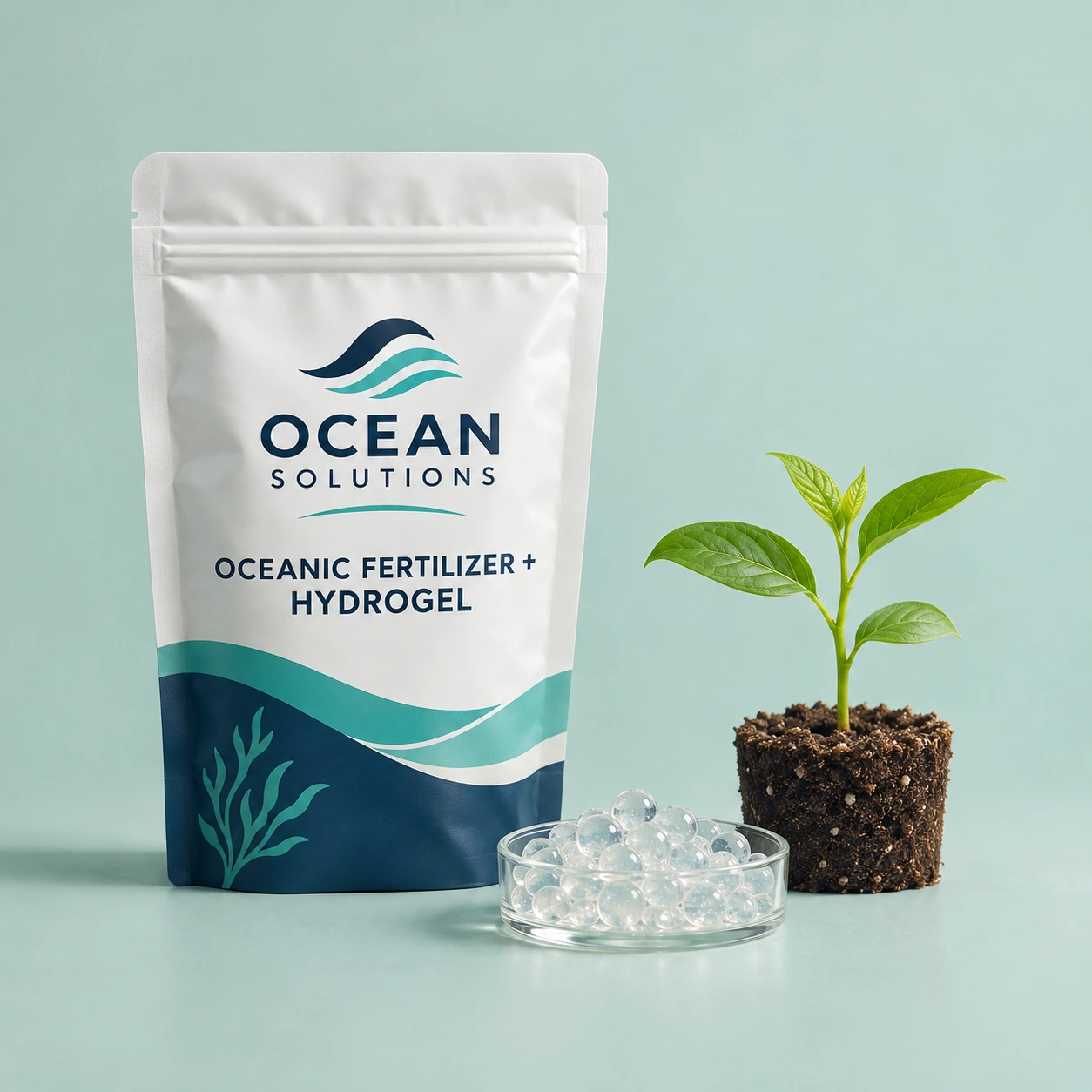
Oceanic fertilizer and hydrogelAI concept
02Oceanic fertilizer and hydrogel
Marine minerals. Smarter growing.Explore product

Marine minerals. Better moisture management.

Our proposed fertilizers incorporate Superabsorbent Polymer (SAP) technology to retain moisture around the root zone and support more efficient irrigation. Formulations are matched to crop, soil, climate and application method.

Project estimate: SAP technology could reduce agricultural water consumption by up to 60%, depending on soil characteristics, climate and application. This is an indicative potential, not a verified result for every formulation; product-specific trials are required.

For Growers, agricultural distributors & farming partners

Your advantages

  • Support soil moisture retention and irrigation efficiency with an appropriate SAP formulation.
  • Combine marine minerals and nutrients with a crop-specific application programme.
Discuss your requirements
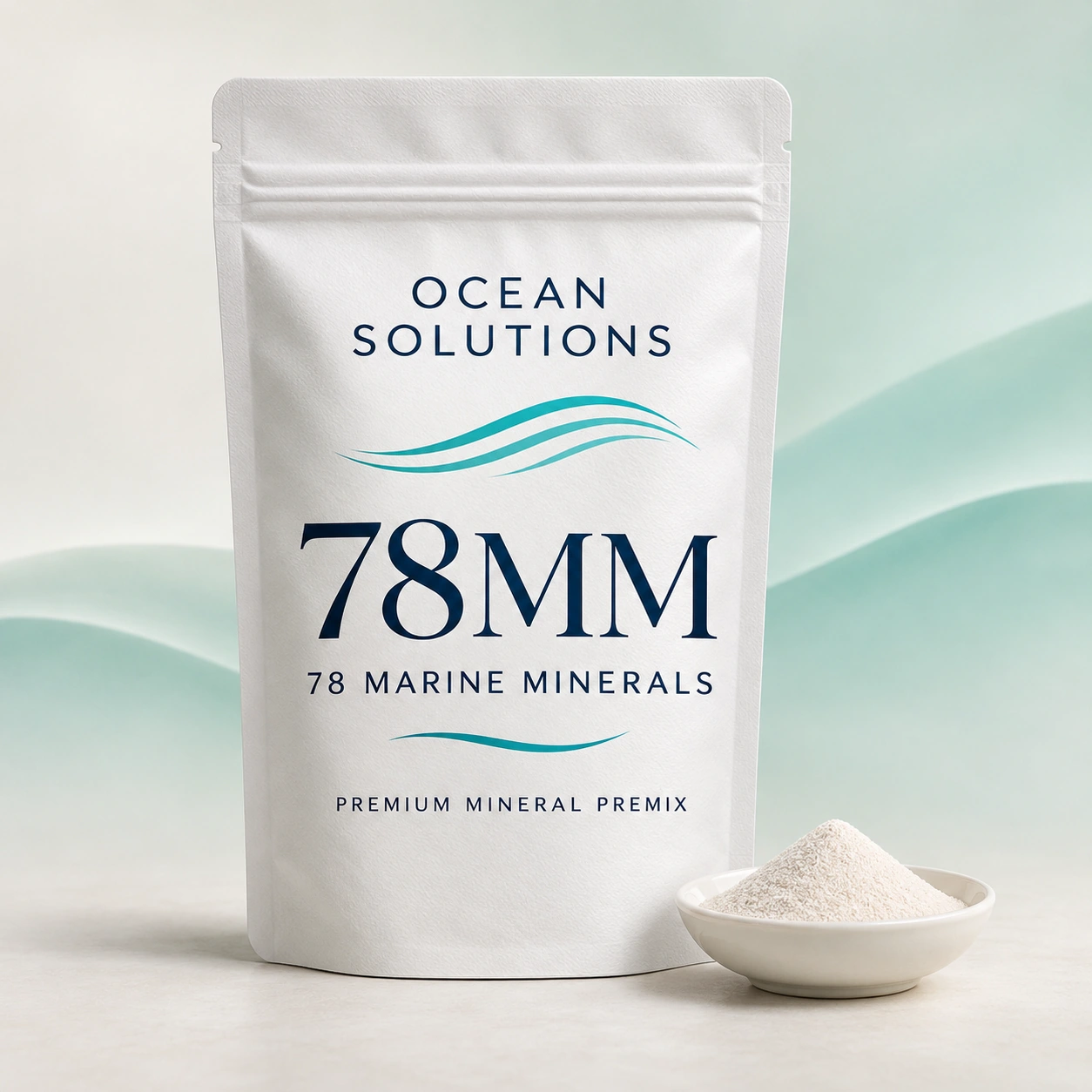
78 Marine Minerals (78MM) premixAI concept
0378 Marine Minerals (78MM) premix
Premium 78MM. Multiple applications.Explore product

A premium marine-mineral solution.

A premium marine-mineral premix for higher-value formulations. Discuss the mineral profile, purity and quality specification your application requires.

78MM is the proposed product-range name. The final mineral and trace-element profile, concentrations, purity and suitability for each use must be established by analytical testing and applicable approvals.

For Nutraceutical, food, beverage, cosmetics, personal-care & agricultural manufacturers

Your advantages

  • Explore functional beverages, food ingredients, nutraceuticals, cosmetics, personal care and agricultural formulations.
  • Discuss composition, purity, traceability and application-specific quality specifications before supply.
Discuss your requirements

Made for your market

One vessel.
Three routes to market.

Choose the product family that fits your business.

Product specifications & project status

Factory Vessel product ranges are proposed and subject to testing, applicable approvals and final specifications.

Product and vessel imagery are illustrative AI-generated visualisations.

Marine Water Plant (MWP)

Designed for long-term supply.
Configured for demand.

01

Long-term operation

Plan dependable, high-volume freshwater supply for a defined location.

Explore advantage

A desalination facility at sea

The Marine Water Plant (MWP) is designed for long-term operations on a platform or vessel, supplying freshwater to an onshore receiving facility. It is not a regularly moving product-manufacturing Factory Vessel.

For utilities and customers: plan a dedicated bulk-water supply around local demand and distribution requirements.

02

Planned expansion

Design the initial platform around any intended future capacity.

Explore advantage

Expansion starts with the initial design

Expanding an MWP on a platform or vessel is technically challenging. Future expansion requires the hull or platform, space, structural capacity and supporting infrastructure to be sized beyond the initial production requirement from the outset.

For partners: assess the full expansion scenario during feasibility and engineering; later modules cannot be assumed to fit an unchanged platform.

03

Onshore connection

Connect by pipeline to a receiving facility and inland network.

Explore advantage

From offshore production to inland supply

Freshwater is transferred by pipeline to an onshore facility for storage and distribution through the inland water network. Pipeline routes, port interfaces, receiving infrastructure and permissions form part of each project.

For utilities: define water quality, transfer capacity, storage and distribution together.

04

Relocatable

Relocate when necessary, following technical and site assessment.

Explore advantage

Long-term placement with relocation options

An MWP can be relocated when necessary, but it is not intended for regular movement. Disconnection, marine transport, new pipeline connections, permits and recommissioning must be assessed before any relocation.

For customers: consider relocation as a planned project, rather than routine mobile delivery.

05

Bulk-water supply

Focus MWP operations on high-volume freshwater production.

Explore advantage

A dedicated water-supply model

MWP configurations target 40,000–300,000 m³ of freshwater per day for regional, municipal and industrial supply. The Factory Vessel’s mineral-water, fertilizer and 78MM product markets are presented separately.

For water buyers: assess the production specification, supply agreement and delivery infrastructure for your operation.

06

Energy planning

Assess energy demand and environmental requirements for each site.

Explore advantage

Project-specific energy and discharge planning

Each MWP requires an energy strategy and a site-specific assessment of intake, residual brine, discharge and marine impacts. Renewable and on-board energy options depend on technical feasibility and the receiving location.

For partners: evaluate energy, environmental performance and operating costs together during feasibility.

Production capacity & beneficiaries

Different needs.
A platform configured for each.

From regional water security to municipal supply and industrial operations, the Marine Water Plant (MWP) can be configured around the volume, water quality and delivery model each customer needs.

40,000–300,000m³ of water / dayFive Marine Water Plant configurations

Choose the production scale that matches your region, city or industrial operation. Production modules, treatment stages and delivery arrangements are tailored to each project.

Choose your scale

Capacity that fits your ambition.

MWP 40K · Daily production40,000m³ / day
Estimated people served266,667people per dayBased on 150 litres per person per day

Designed around your volume, water specification and delivery needs.

Illustrative estimate at 150 litres per person per day, assuming all output is allocated to people. Actual population served depends on domestic demand, network losses, operating availability and industrial or agricultural allocation.

Regions & islands

Bring capacity closer to the communities that need it.

A regional configuration can complement local resources and connect production to several coastal delivery points, subject to port access, storage and distribution planning.

Who benefits

Regional authorities, island communities, coastal populations and tourism destinations.

Your configuration

  • Regional supply agreements with water allocated across priority locations.
  • Delivery through a planned combination of shore connections, storage and onward distribution.
  • Future expansion or relocation assessed against the original platform design and receiving infrastructure.

Strengthen regional supply resilience and reduce dependence on a single local water source.

Configure the capacitySpecify the water qualityPlan the deliveryScale with demand

Deployment configurations are indicative. Final capacity, beneficiaries served, delivery infrastructure and commissioning are defined through project-specific technical and commercial studies.

Environment & energy

Assessing our environmental footprint.

Responsible water production means managing marine impacts and energy demand together. Our approach combines resource recovery, on-board energy production and renewable technologies under evaluation.

Care for marine ecosystems

Highly concentrated brine can place pressure on marine ecosystems if it is not properly managed.

Our approach

Integrate mineral recovery with controlled brine management. Each deployment requires a site-specific discharge plan and environmental assessment.

On-board energy options

High energy demand and dependence on the grid can increase operating costs and the carbon footprint of water production.

Our approach

On-board energy production is designed to support operations, reduce reliance on shore power and create opportunities to lower emissions.

Make fuller use of resources

One ocean intake can support water production and the recovery of valuable mineral products.

Our approach

Develop complementary product streams and assess energy, material use and discharge together to improve overall resource efficiency.

Sustainability roadmap for 2026

Four energy options under evaluation.

Dual-fuel hydrogen

Up to 85%hydrogen

1,000–2,670 kW power range under evaluation.

Solar energy

~1,500 m²of solar panels

Solar generation combined with energy storage.

Wind-assisted

500 m²automated kite

Kite traction to support vessel propulsion when conditions allow.

Plug-in / electric

Short routesand suitable ports

Electric operation and shore-power options where port infrastructure allows.

Roadmap options and figures are under evaluation, subject to technical feasibility, vessel configuration, port infrastructure and project-specific assessment. They do not represent installed capabilities or verified emissions reductions.

Water relief initiative

One ship to begin. A fleet to aspire to.
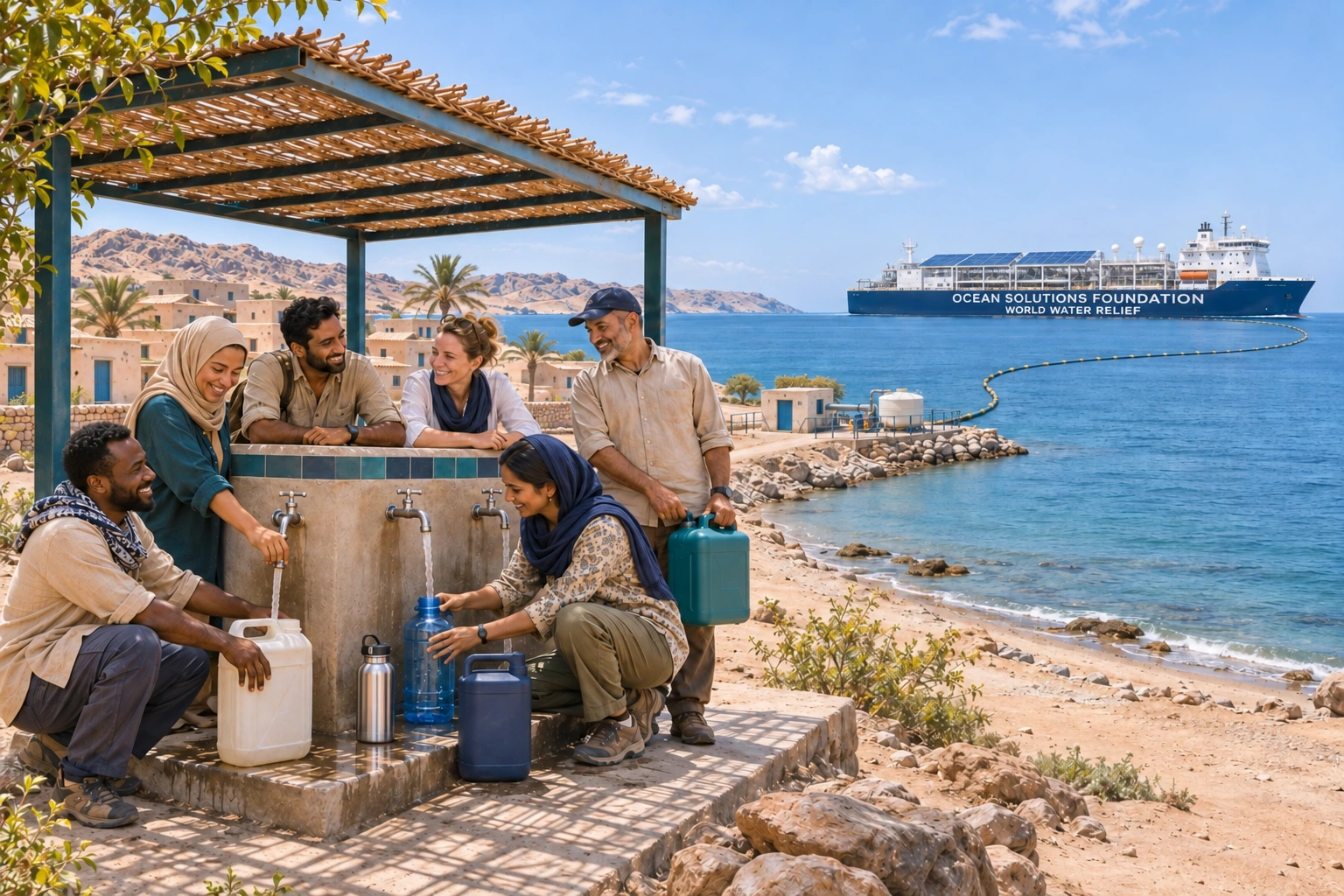
Illustrative coastal relief concept: diverse adults collecting water, with a large ship labelled Ocean Solutions Foundation and World Water Relief offshore transferring water to shore
Illustrative AI-generated concept · Proposed initiative

A foundation for water relief

Bring water.
Restore hope.

We are seeking partners to help establish the proposed Ocean Solutions Foundation. Our ambition is to start with one water-producing ship and build a relief fleet as partnerships and resources grow.

The aim is to support coastal communities that lack the funding or infrastructure for permanent desalination: people affected by drought, conflict, displacement, floods and other disasters. Working with humanitarian partners, water could support drinking, cooking, hygiene and food-relief operations.

Register your interest

Deployment would depend on safe coastal access, local agreements, water-quality validation and distribution partners.

This is a proposed water-relief initiative. This website does not present it as a registered charity and does not accept donations or investments.

Future financing may include crowdfunding, subject to legal and regulatory review. No campaign is open, no launch date or target is set, and this website does not invite investments or contributions.

Proposed initiative · Commercial and humanitarian partnerships

Purpose before scale

A practical response to water stress.

01

Communities & cities

Develop an additional water-supply option for coastal populations and utilities facing constrained resources.

02

Regions & islands

Explore deployment where seasonal demand, drought or limited infrastructure puts pressure on local supply.

03

Industry & livelihoods

Support productive activity through water supply and complementary marine mineral products.

First deployment location and beneficiary numbers are under evaluation. Population served will depend on water allocation, local demand and distribution infrastructure.

From preparation to first water

Progress through clear milestones.

  1. 01

    Define the deployment

    Confirm location, customer needs and the proposed delivery model.

  2. 02

    Down payment & full feasibility

    Under a signed business-to-business study or supply contract, receive the 15% advance of the total project value, then begin full feasibility, engineering and environmental planning.

  3. 03

    Procure & fit out

    Settle financing and commercial agreements, acquire the vessel, procure equipment and complete the approved fit-out.

  4. 04

    Test & commission

    Test water quality, verify performance and commission the vessel before first supply.

The 15% advance is a commercial payment by a business client under a separate signed contract, not a public contribution or a website payment. The contract must specify the study scope, deliverables, timing and cancellation or refund terms before payment. Full feasibility begins after receipt. The indicative 12–14-month schedule remains subject to financing, vessel availability, approvals and execution.

Illustrative Factory Vessel payment sequence

Illustrative business-to-business contract payments, not a request for public funding. A 15% advance of the total project value initiates the comprehensive feasibility study only under a separately signed study or supply contract. Its scope, deliverables, timing, treatment of the advance and any cancellation or refund rights must be agreed in writing before payment. No payment is made through this website.

  1. Down payment · 15%Before the comprehensive feasibility study begins.
  2. Vessel purchase · 40%Month 1.
  3. Equipment and vessel fit-out · 33.33%Months 1–2.
  4. Ship management and operating balance · 11.67%From Month 1 onwards.

Percentages are rounded to two decimal places where needed and total 100%. Allocations and dates are indicative, subject to the final scope, supplier agreements and technical and financial assessment. They do not replace the separate commissioning schedule.

People & accountability

Build confidence through evidence.

Ask us for project-specific information about leadership, technical partners and responsibilities before entering a commercial agreement. Proposed capabilities require validation and do not establish an operating track record.

Information for project discussions

  • The proposed scope, intended location and delivery model.
  • Confirmed contracting parties and partner responsibilities.
  • Technical assumptions, material risks and required approvals.
  • Written commercial terms, deliverables and payment conditions.

Questions, answered

Before you participate.

Can I make a payment through this website?

No. This website accepts commercial and humanitarian partnership enquiries only. It does not collect payments, donations or investment commitments.

What does the 15% advance relate to?

It is an indicative business-to-business advance of the total project value, payable only under a separately signed study or supply contract. The contract must explain the work covered and any cancellation or refund rights before payment. It is not a contribution to the proposed foundation.

Where will the first vessel operate?

The initial deployment location is under evaluation. Selection will consider water need, customers, port access, distribution, environmental conditions and project feasibility.

How will progress be communicated?

Project information is available on request. Visitors who separately opt in can receive project news by email.

How will my details be used?

We use your details to respond to your interest. Project-news emails are optional and require a separate opt-in. Read the Privacy notice linked beside the form for lawful bases, retention criteria, recipients, your rights and complaints. Contact info@oceansolutions.net to withdraw consent or exercise your rights.

Be part of the conversation

Register your interest.

Contact us about a commercial project or humanitarian partnership. This form is not an investment or fundraising registration.

Questions or partnership enquiries? info@oceansolutions.net

We use these details to respond to your interest. Marketing is optional. Privacy notice · Cookies & storage

Expression of interest only. No funds are collected on this page.